How to Eat Healthy While RVing: Fueling Adventure Without Losing Focus
RV life is filled with freedom, adventure, and the thrill of discovering new places. From coastlines to mountaintops, every day is a chance to explore—and often, to eat somewhere new. But while the open road is exciting, staying on track with healthy eating can be a challenge.
Whether you’re trying to build muscle, maintain your energy, or just feel your best, eating healthy while RVing requires some intention, creativity, and flexibility. The good news? You don’t have to give up all the fun—or the food. With a few smart strategies, you can enjoy the journey and fuel your body right.

The Challenge of Staying Consistent on the Road
When you’re constantly moving, it’s easy to fall into a pattern of convenience:
- Grabbing fast food at gas stations
- Snacking on empty carbs during long drives
- Eating out often just to avoid cooking in a small space
And let’s be honest—you want to try local food! You’re in a new city, a new state, a new region… and part of the RV lifestyle is experiencing those unique flavors.
That’s totally okay. In fact, you should enjoy it. Just don’t let occasional indulgences turn into everyday habits.

Strategy #1: Cook the Majority of Your Meals
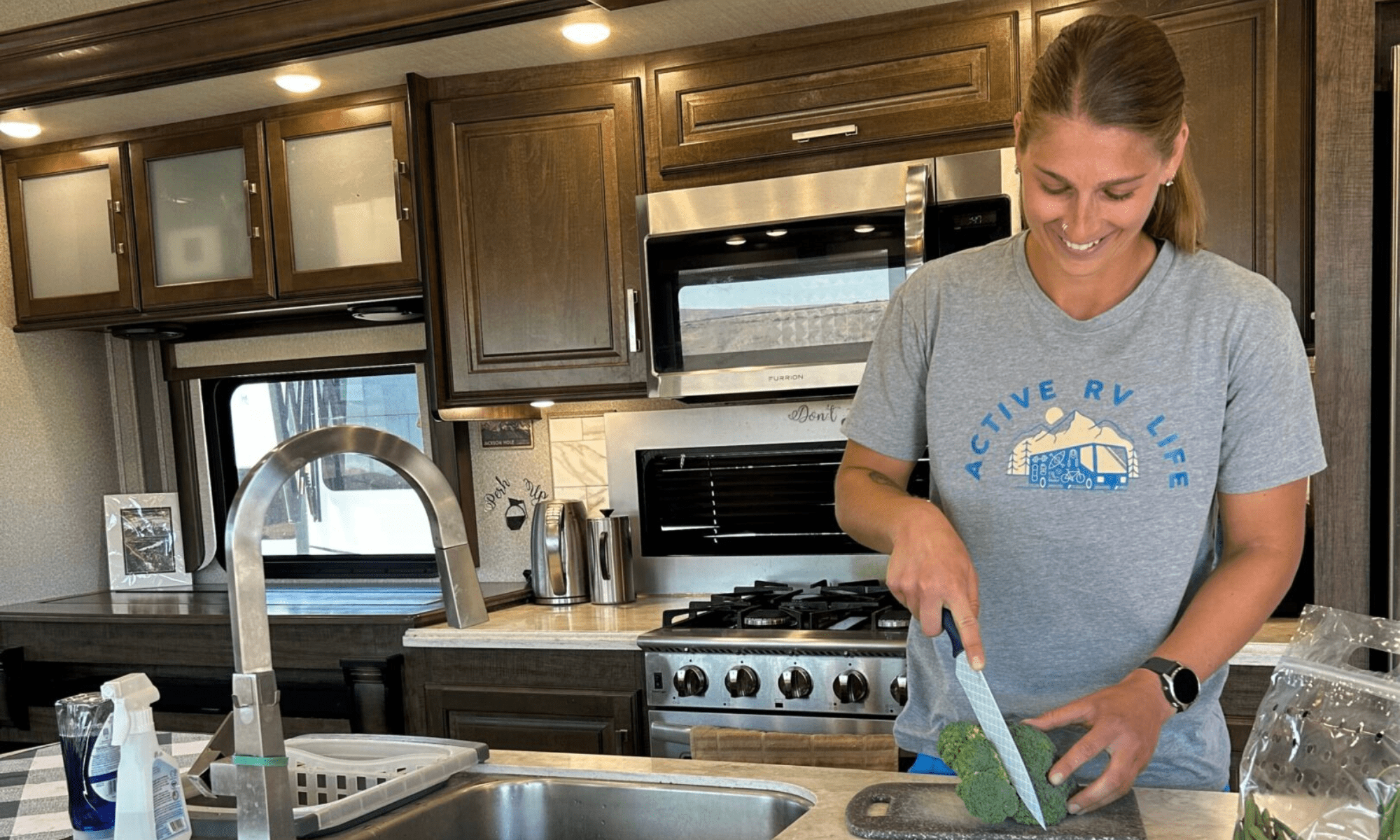
Cooking your own meals is the single best way to control your nutrition while RVing. You know what’s going into your food, you can portion it properly, and you’ll avoid the calorie overload that often comes with restaurant meals.
Tips to make RV cooking easy and healthy:
- Stock your RV with a few go-to spices, olive oil, and healthy sauces (like salsa, hot sauce, or balsamic glaze)
- Keep fresh ingredients on hand: greens, bell peppers, carrots, eggs, chicken, ground turkey, canned beans, oats, and rice or quinoa
- Use simple kitchen gear like an Instant Pot, air fryer, or portable grill to make healthy meals without a mess
Here’s a quick example of a day of meals you can cook in the RV:
- Breakfast: Oats with protein powder, peanut butter, and banana
- Lunch: Grilled chicken salad with lots of veggies and a light vinaigrette
- Dinner: Ground turkey tacos in lettuce wraps with avocado and salsa
Strategy #2: Eat Out Without Throwing Your Nutrition Away
Eating out is part of the adventure—but you don’t have to abandon your goals when you sit down at a local diner or café.
Here’s how to stay smart while still enjoying it:
- Look for grilled, baked, or roasted options instead of fried
- Substitute fries for a side salad or veggies
- Go easy on heavy sauces or dressings—ask for them on the side
- Start with a broth-based soup or salad to fill up with fiber and water
- Portion control: restaurant servings are often double what you need—take half to go
You can still try that famous BBQ joint or must-have lobster roll—just don’t make it your default for every meal.
Strategy #3: Plan Your Cheat Meals Around Your Workouts
Here’s a smart mindset shift: earn your indulgences with intentional effort.
Instead of random snacking or grabbing comfort food out of boredom, plan your cheat meals around your tough workouts. After a strength session, long hike, or high-intensity RV workout, your body is primed to use those calories more effectively.
This isn’t about guilt or punishment—it’s about rewarding hard work and staying strategic.
Example:
You’ve just finished a high-rep dumbbell workout and a 30-minute jog around a scenic trail. That evening, you treat yourself to a burger at a local hotspot—but skip the soda and maybe share a dessert.
You’re still enjoying life and respecting your goals.

Strategy #4: Master the Art of Meal Prepping Cold Meals
Meal prepping is a game-changer on the road. When you’re out hiking, exploring a national park, or driving all day, having ready-to-eat food is a lifesaver.
The key? Prep meals that taste great cold.
Best cold meal prep ideas:
- Grilled chicken or tuna wraps with spinach and hummus
- Rice or quinoa bowls with veggies and a drizzle of dressing
- Pasta salads with olive oil, cucumbers, cherry tomatoes, and lean protein
- Hard-boiled eggs, nuts, and fresh fruit snack boxes
Pack them in a cooler or fridge, and now you’ve got a healthy lunch anywhere—without the need to reheat or rely on the nearest gas station snacks.
Strategy #5: Keep Healthy Snacks Within Reach
RV travel often means long drives and unpredictable mealtimes. Keeping healthy snacks on hand can prevent you from reaching for chips or candy when hunger hits.
Smart RV-friendly snacks:
- Greek yogurt cups (if you have refrigeration)
- Protein bars or shakes
- Almonds, walnuts, or mixed nuts
- Sliced apples with almond butter
- Rice cakes with hummus or avocado
- Beef or turkey jerky (look for low-sodium, low-sugar options)
Stay ahead of your hunger, and you’ll be less tempted by impulse snacks or fast food.

Strategy #6: Hydrate Like It’s Your Job
You might be surprised how often hunger is actually just dehydration. Especially while traveling, in higher altitudes, or after a workout, you need more water than usual.
Keep a reusable water bottle handy and refill often. Add lemon or electrolytes if plain water gets boring. Staying hydrated helps with:
- Energy levels
- Digestion
- Appetite control
- Mental focus

Final Thoughts: Enjoy the Ride, Fuel the Adventure
Healthy eating while RVing doesn’t mean perfection—it means being intentional. It’s okay to enjoy the regional foods and special treats that make each destination memorable. Just balance it out with thoughtful choices, consistent routines, and an understanding of your goals.
To recap:
- Cook your own meals as often as possible
- Eat out smart by choosing healthier options and controlling portions
- Plan cheat meals around intense workouts
- Prep cold meals for days on the go
- Keep healthy snacks ready
- Drink more water than you think you need
And most importantly: enjoy your time RVing. You’re living a life of adventure, freedom, and discovery—and fueling your body right will only make it better.
Stay safe on the road, eat well, and make every mile count.